Posts

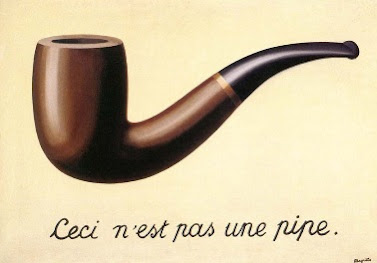
Teleological Equivalence of The Treachery of Images and Facts and Circumstances in Legal Analysis
Image
I recently had a fascinating epiphany while studying surrealist art during my last visit to the High Museum of Art in Atlanta. An art museum was undoubtedly a most unlikely venue for the sort of realization I had as it was one which led me to consciously understand something about legal analysis, a considerable preoccupation of mine due to my profession as an international tax practitioner, that I hitherto only intuited: the conceit of many legal/tax practitioners to classify claims as facts and circumstances , particularly in the rendition of certain forms of written advice.   In the formulation of advice, practitioners invariably initially engage in a fact-finding exercise whereby they raise empirical questions to understand their client’s facts and circumstances. Once the relevant facts and circumstances are ascertained, the practitioner must judge how the law applies thereon. Any conclusion or advice necessarily proceeds therefrom. In legal analysis, gathering the complete se...

Epistemological Explanation of Fortune-Telling, Soothsaying, Prescience, and the Likes

I have noticed two major schools of thought with respect to those who claim to foresee the future. The adherents of one school dismiss such claimants out of hand, decry the impossibility of their claims, and swiftly label them as frauds and charlatans. The adherents of the other school may dismiss some such claimants as snake oil salesmen but nonetheless superstitiously believe in the supernatural phenomena of prescient and psychic abilities of genuine soothsayers. Though I loosely fall into the former school of thought, I do reject the rigidity of many of my schoolmates’ position because their absolutist dismissal precludes them from considering the issue from a nuanced, philosophical perspective. While the view through the philosophical lens certainly does not lend credence to the latter school’s beliefs of an extraordinary nature, it does nonetheless reveal that the claims regarding the abject impossibility of foreseeing the future by the dogmatists in my midst are arbitrary and err...

Freudian Internal-External Divide and the Impossibility of Normalcy

The central implication of one of psychoanalysis’ most startling discoveries is that the unconscious is the source analog for psychic investment into reality. This psychic investment is a sine qua non of our sensory experience of reality. No one experiences noumenal reality without some irreducible phantasmic investment. What we see is to some extent a consequence of what we imagine we see. Though fantasy is opposed to reality, it nonetheless provides an underlying support for our sense of reality, the absence of which threatens the dissolution of our sense of meaningfulness of reality. Interestingly, within the meaning of strict psychoanalytic tradition, the “normal” subject maintains an incompatible divide between reality and fantasy and knows how to distinguish one from the other. In Freudian terms this is the external-internal divide according to which what is unreal, merely subjective, is only internal and what is real is apart from the subjective, it is outside (Sigmund Freud,...

Postmodernity’s Misplaced Sense of Humility

Disclaimer: References to postmodernists herein should be construed to mean laypersons whose thinking is influenced by postmodernism, not postmodernists in the strict sense. One of the basic tenets of good thinking is that one must base their reasoning on how things are rather than how one wishes things to be. The greatest challenge that postmodernity has hurled at us is that the conception of how things are has been so thoroughly blended with how one wishes things to be that the two constructs have been rendered inextricable. Postmodernism’s consistent messaging about the purely subjective nature of truth and the impossibility of objective truths can have the undesirable effect of orienting one to believe that how one wishes things to be is actually how those things are. This misguided understanding can then be used as the basis for further misguided reasoning. I encounter my fair share of truth relativists (often very obstinate ones) at my weekly philosophy club meetings. Despit...

Verifying the Falsifiability Criterion

The 20th century philosopher of science, Karl Popper, through his falsifiability criterion, proposed a novel approach to scientific discovery. Though his criterion was eventually shown to be flawed, it nonetheless at least bequeathed us with knowledge of how not to practice science. Popper’s falsifiability criterion was, at its core, rooted in the Humean problem of induction. His essential argument was that empirical statements were no more verifiable than metaphysical ones since they were inductively derived from true premises. The inherent, obvious error in Popper’s conclusion aside, ironically enough, Popper never considered that the judgments necessitated through his own proposed criterion were ultimately not free of verification.   The verifiability criterion is a long-standing central tenet of science according to which scientific claims must necessarily be observable in the world or induced from experience. Rejecters of inductivism, on the other hand, would assert that inf...

Filmic Analysis of Joyland

Gender issues, in general, and transgender issues, in particular, are highly contentious hot button issues in contemporary America. Issues such as the incidence of gender reassignment procedures, transgender women’s participation in female sports and their usage of gender reserved-bathrooms are hysterically discussed by news pundits, politicians, and influencers of various stripes alike. These issues have pervaded our societal conscious to the point that one cannot help but hear of them. Admittedly, though this has certainly allowed me to become better aware of the prevailing gender-related controversies, as a largely unaffected heterosexual male, I have always been disinterested in, and capable of thinking only very coldly about, this subject. However, that has at least slightly changed upon my recent viewing of Joyland , Saim Sadiq's brilliantly-directed film that won awards in the Un Certain Regard and Queer Palm categories at the 2022 Cannes Film Festival. While Joyland expl...

The Folly of Submissively Capitulating to, Over Deferentially Acknowledging, Noumena

The idea of the existence of reality independent of, and beyond our, limited human perception has been exhaustively expounded and debated in many different philosophical contexts. Different versions of the same basic premise have been variously called the noumenal world, Forms, dharma, and The Real among others. For purposes of this blog, I will, as per my general preference, use the Kantian terms of noumenal/phenomenal although I should be clear that I will not use the terms within the strict meaning of Kantian canon. While I am amenable to this idea, I am often troubled by how it contributes to erroneous conclusions amongst casual philosophers. It has also, over the years, reinforced in me the idea that in many matters, those who are oblivious are actually more likely to draw close-to-the-mark, albeit not accurate, conclusions than those who possess rudimentary or insufficient knowledge. Alas, that is an altogether different subject that deserves its own epistemological inquiry on s...